
Marriage Biodata vs. Resume: Why One Size Doesn't Fit All in Your Life's Journeys
In today's interconnected world, professional resumes are familiar tools for job applications. But when it comes to finding a life partner, should you use a resume, or is there a more fitting document? Discover why a marriage biodata serves a distinctly different purpose.

In today's interconnected world, professional resumes are a familiar tool, a standard for job applications. But when it comes to the profoundly personal journey of finding a life partner, should you use a resume, or is there a more fitting document?
The answer is clear: a marriage biodata serves a distinctly different purpose than a resume, and understanding this difference is key to making the right first impression in matrimony.
While both documents aim to present an individual's profile, their objectives, content, and tone diverge significantly. Let's delve into why a specialized marriage biodata is indispensable and how it differs from a professional resume.
1What is a Professional Resume?
A resume is a concise document primarily used in job applications. Its sole purpose is to highlight an individual's professional skills, work experience, educational qualifications, and accomplishments relevant to a specific job role.
It's a marketing tool designed to secure an interview by demonstrating professional competency and value to a potential employer.
Key characteristics of a resume:
Understanding the core elements that define a professional resume:
- Purpose: To get a job interview
- Focus: Professional skills, experience, and achievements
- Audience: Recruiters and hiring managers
- Tone: Formal, results-oriented, professional
- Content: Optimized with keywords relevant to industry/job, usually 1-2 pages
2What is a Marriage Biodata?
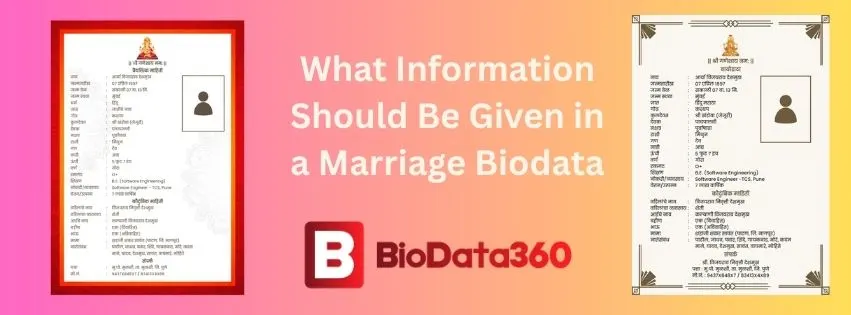
A marriage biodata, on the other hand, is a comprehensive personal profile designed specifically for matrimonial purposes. Its aim is to provide a holistic overview of an individual, encompassing not just professional capabilities but also personal background, family details, cultural values, astrological information, and partner preferences.
It's an introduction to a potential life partner and their family, facilitating a compatibility assessment beyond professional metrics.
Key characteristics of a marriage biodata:
Understanding what makes a marriage biodata unique:
- Purpose: To find a suitable life partner and initiate matrimonial discussions
- Focus: Personal attributes, family background, cultural values, education, lifestyle, and partner expectations
- Audience: Prospective partners and their families
- Tone: Personal, respectful, transparent, often reflecting cultural norms
- Content: Includes sensitive personal and family information, often accompanied by a photograph

3Marriage Biodata vs. Resume: The Critical Differences
Let's break down the key distinctions to understand why one cannot simply replace the other:
A comprehensive comparison highlighting the fundamental differences between these two documents.
Primary Goal
Biodata: Finding a life partner; assessing holistic compatibility | Resume: Securing a job interview; assessing professional fit
Audience
Biodata: Prospective spouse & their family | Resume: Recruiters & hiring managers
Content Focus
Biodata: Personal details, family background, religion, lifestyle, partner preferences | Resume: Professional skills, work history, achievements
Tone
Biodata: Personal, respectful, authentic | Resume: Formal, results-oriented, professional
4Why a Resume Falls Short for Matrimony
Using a resume for matrimonial purposes is like bringing a hammer to a screwdriver job – it's the wrong tool.
Lack of Personal Depth
A resume intentionally omits crucial personal and family details that are vital for matrimonial consideration. It tells you what someone does, not who they are or where they come from.
Misplaced Focus
It heavily emphasizes professional achievements, which, while important, are only one facet of a person sought in a life partner. Compatibility extends far beyond career success.
Missing Cultural Nuances
Traditional matrimonial processes often rely on details like caste, gotra, and astrological compatibility, which are absent in a resume.
Inappropriate Tone
The formal, results-driven tone of a resume doesn't foster the warm, personal connection desired in a marriage proposal.
5The Power of a Dedicated Marriage Biodata
A well-crafted marriage biodata serves as your authentic ambassador in the search for a life partner.
Present a Holistic Profile
Introduce yourself not just as a professional, but as an individual with a unique personality, values, and family heritage.
Communicate Key Information Clearly
Provide all necessary details (personal, family, astrological, preferences) upfront, saving time and fostering transparency.
Reflect Cultural Respect
Demonstrate an understanding and respect for the traditional and cultural aspects of matrimonial alliances.
Make a Lasting Impression
A professional and well-organized biodata speaks volumes about your sincerity and seriousness in the marriage process.
Ready to Create Your Perfect Biodata?
Use our professional templates to create a stunning marriage biodata that stands out and attracts the right matches.
Create Your Biodata NowYour Journey to Finding the Perfect Match
Creating a compelling marriage biodata has never been easier. Platforms like Biodata360 are specifically designed to help you craft an impressive and comprehensive marriage biodata in minutes, offering a wide range of customizable templates that capture all the essential details required for your matrimonial journey.
Don't compromise on this crucial first step; choose the right tool for the most important journey of your life.